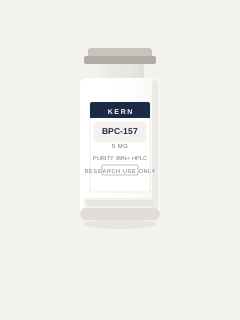
Glutathione
Glutathione (1500mg / 600mg)
Vial Size
$150USD
Third-Party Tested
Independent lab verified
Batch-Specific CoA
Publicly accessible
YPB.259
Reference number
1500mg
Lyophilized vial
Master antioxidant tripeptide (Glu-Cys-Gly). Plays a central role in cellular redox homeostasis and detoxification.
Origin
Glutathione was first identified by Frederick Gowland Hopkins in 1921 at Cambridge University. Hopkins isolated the compound from yeast and recognized it as a dipeptide, though its correct tripeptide structure (gamma-glutamyl-cysteinyl-glycine) was established by Harington and Mead in 1935. It is the most abundant non-protein thiol in mammalian cells.
Research Lineage
Meister and Anderson at Cornell University Medical College conducted foundational work on the gamma-glutamyl cycle and glutathione metabolism in the 1980s. Lu at the USC Keck School of Medicine has published extensively on hepatic glutathione regulation. Over 170,000 PubMed entries reference glutathione, making it one of the most studied molecules in biochemistry.
Mechanism of Action
Glutathione functions as the principal intracellular redox buffer, cycling between reduced (GSH) and oxidized (GSSG) forms via glutathione peroxidase and glutathione reductase. It serves as a cofactor for glutathione S-transferases in phase II detoxification, conjugating electrophilic xenobiotics for excretion. It also maintains protein thiol status and regenerates other antioxidants including vitamins C and E.
Structural Notes
Tripeptide. Sequence: gamma-L-Glutamyl-L-Cysteinyl-Glycine. Molecular weight: 307.32 Da. The gamma peptide bond (via glutamate side chain) confers resistance to normal peptidases. The cysteine thiol group (-SH) is the active functional group.
Key References
Meister A, Anderson ME. Annu Rev Biochem. 1983;52:711-60.
Lu SC. Biochim Biophys Acta. 2013;1830(5):3143-53.
Research Use Only. This product is intended for laboratory research purposes only. Not for human or veterinary use. Not for sale to minors.